
There is an unspoken chapter in trauma recovery that nobody prepares you for.
It’s the one that arrives around the six month mark. Like where I’m now at …
The emergency has passed. The media has moved on. The visitors stop checking in. The casseroles have disappeared and the insurance paperwork has become just another pile on the kitchen table.
From the outside, it looks as though life should be returning to normal.
Inside?
You’re exhausted.
Not the kind of tired that a good night’s sleep fixes.
The kind that settles into your bones.
The kind where you crawl into bed desperate for rest, only to have your mind decide it’s the perfect time to replay every terrifying moment, every decision, every loss and every impossible task that still sits on tomorrow’s to-do list.
You stare at the ceiling.
Did I fill out that form?
What if we never feel settled again?
I still have twenty phone calls to make.
What if another fire comes? What if the El Nino predications are true?
The clock keeps moving while your thoughts run a marathon.
And somewhere in that endless loop, another layer of guilt appears.
“Why am I still feeling like this?”
I attended an event last Thursday night hosted by our local Shire featuring a panel of mental health professionals discussing what this milestone actually looks like for most people moving through trauma. And I found myself nodding the entire way through. It all resonated.
B here’s something I wish every trauma survivor knew.
Nothing is wrong with you.
Your nervous system simply hasn’t received the memo that you’re safe.
Trauma isn’t stored in a calendar. It doesn’t politely disappear because six months have passed. It lives in the body, quietly scanning for danger, trying to protect you from ever experiencing that level of pain again. And I’ll be brutally honest, we are so very there. Already considering the upcoming summer and predicted longer fire season. Your brain races immediately to “will this happen to us again” and then “will we have the stamina to rebuild again?”
Even when you’re sitting safely on your couch with a cup of coffee.
Even when the sky is blue.
Even when everyone else thinks you’ve recovered.
Even after the shed has gone up.
The mental load is enormous.
There are rebuilding decisions, financial pressures, endless paperwork, conversations with builders, replacing possessions, supporting family members, working, showing up for friends and somehow remembering to do the grocery shopping (I don’t even remember the last time I actually did that tbh).
No wonder your brain refuses to switch off.
No wonder sleep feels like a luxury.
No wonder you’re carrying exhaustion like an invisible backpack filled with bricks.
This is why sleep hygiene becomes more than another wellness buzzword.
It’s an act of kindness.
It is choosing to dim the lights, put the phone away, breathe deeply, read a few pages of a book, listen to calming music, meditate or simply give yourself permission to slow down without earning it first.
Some nights it works.
Some nights it doesn’t. And last night – believe me – nothing worked.
Both are okay. Despite the fact I feel utter shit today.
Healing isn’t a straight road. It’s more like walking through a fog where some days you can see the horizon and other days you’re navigating one careful step at a time.
The most important thing you can do is stop fighting your body.
Instead of asking, “What’s wrong with me?”
Try asking, “What is my body trying to tell me?”
Maybe it needs rest.
Maybe it needs compassion.
Maybe it needs fewer expectations and more quiet moments.
Maybe it simply needs permission to recover without a deadline.
Our culture celebrates pushing through, staying productive and bouncing back. Producing the successes consistently.
But trauma asks something entirely different.
It asks us to slow down.
To listen.
To soften.
To honour the invisible work our minds and bodies are doing every single day.
If you’re standing at the six month mark feeling depleted, overwhelmed or lying awake at 2:47 am wondering why on earth you’re obsessing over whether or not to pick this colour swatch or that one in the new hallway, please know this:
You are not failing.
You are healing.
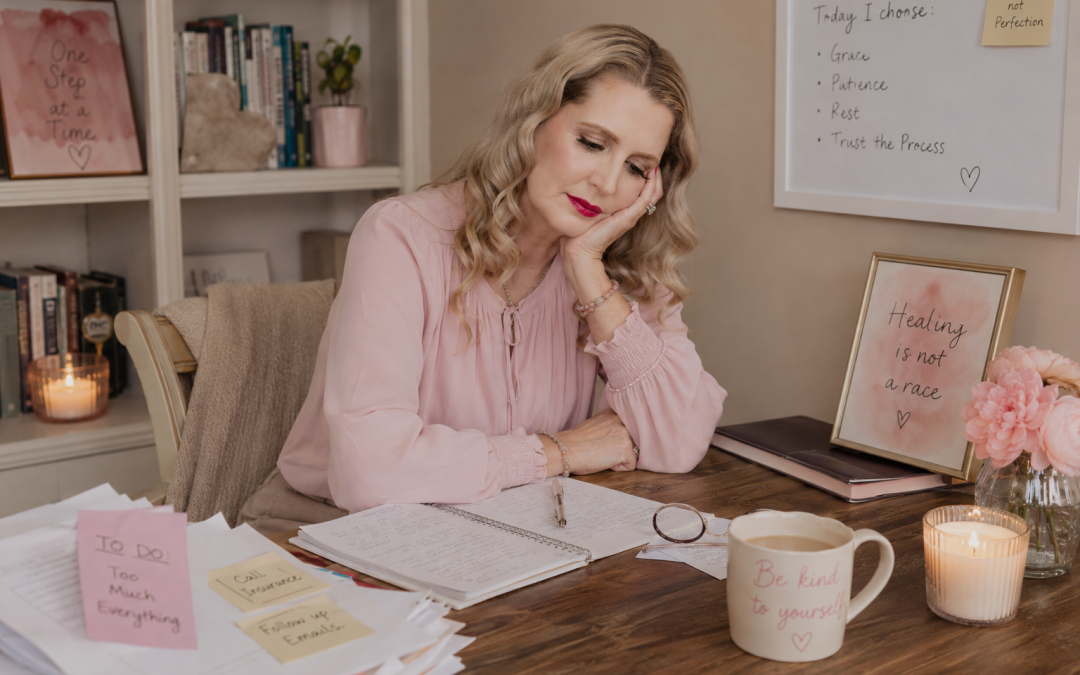
And healing is rarely glamorous. It’s cups of tea gone cold, unfinished to-do lists, afternoon naps you never planned (need more of these), tears that arrive without warning (especially in front of your Psych) and tiny moments where your nervous system whispers, “I’m trying.”
So today, cross one thing off your list. For me it’s 5 and that’s okay too.
Be kinder to yourself.
Your body has carried you through unimaginable circumstances. I keep having to remind myself that we were quite literally running for our lives back in January.
Perhaps the bravest thing to do right now is stop demanding that it hurry up and instead thank it for refusing to give up.
Recovery isn’t measured by how quickly you move on.
It’s measured by how you can take the learnings and gently to carry yourself forward.
Image: Chat GPT